
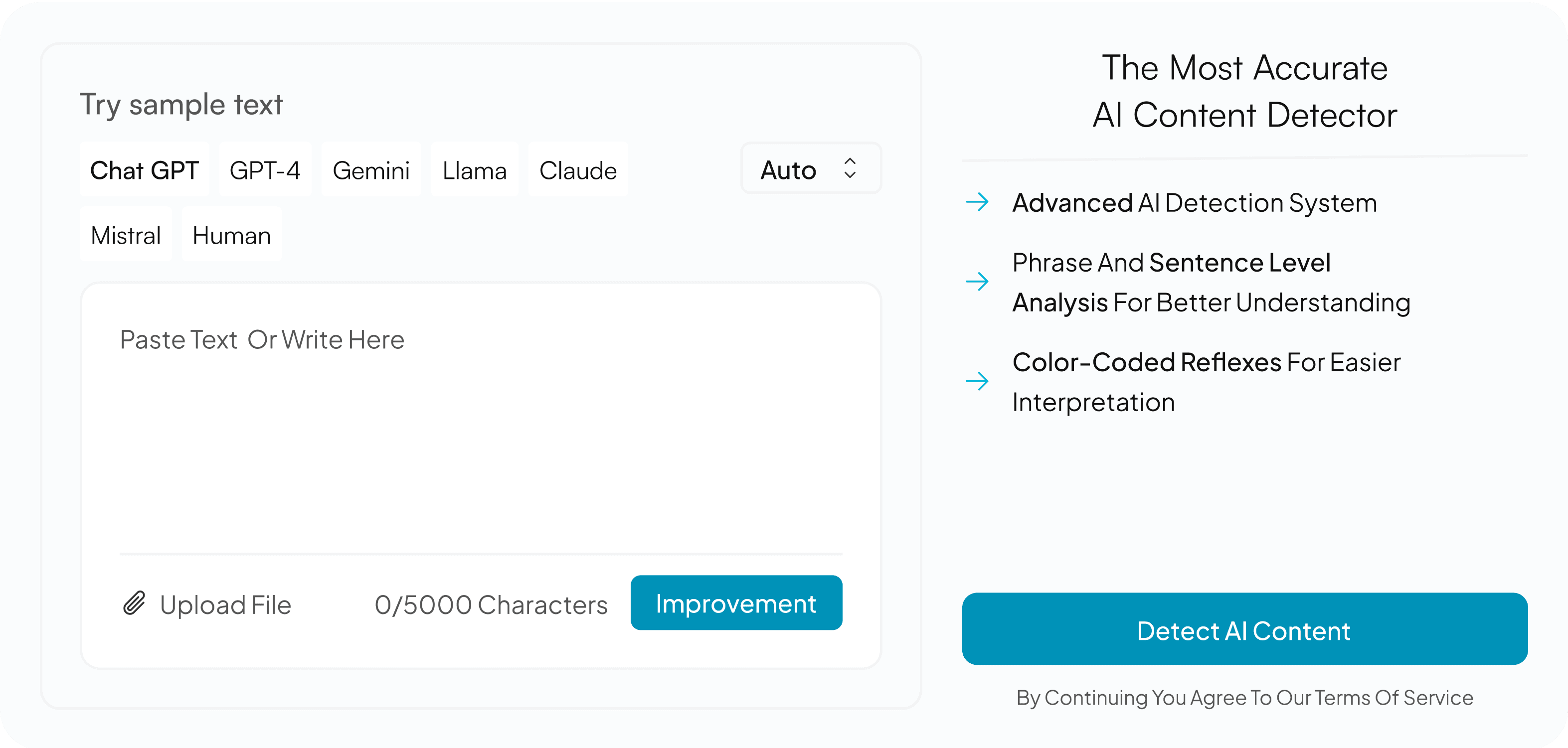
Picture this: an editor gets a submission that feels a little too smooth. Or a teacher reads an essay that sounds nothing like the student's usual work. The quickest move is to paste it into an online detector and see what comes back. It takes ten seconds. But what does that result actually tell you?
Start With What the Score Really Is
A detector doesn't read your text the way a person does. It measures patterns, mainly how predictable the wording is and how evenly the sentences flow. Text that's very predictable and very even gets a higher "AI" score. So when a tool says 70%, it's saying "this resembles machine writing about 70% of the way," not "there's a 70% chance a robot wrote this." Those two things sound alike, but they aren't.
That's why one paragraph can score very differently across tools. Each one is trained on different material and draws its lines in different places.
The Fine Print Nobody Reads on Free Plans
Lots of Free AI Checkers look identical on the surface, but the limits underneath vary a lot. Before you trust a result, check a few things:
- Character or word caps. Some tools only scan a few thousand characters per go. If you paste a 3,000-word article and the tool quietly reads only the first chunk, the score covers only part of your text.
- Daily scan limits. A handful stop after a few checks, which matters if you're reviewing a batch.
- Privacy. Some services keep what you paste. If the text is a client draft, a thesis, or anything unpublished, look for a plain statement about storage first.
- Language support. Many tools are built around English. Results on other languages, or on translated text, can be shakier.
For long pieces, split the text into sections of similar size and check each one. If the sections score very differently, that itself is useful information.
A Calmer Way to Judge a Piece of Writing
When you need to Check If Your Text is AI-Generated, a single number is a weak basis for a decision. A steadier routine looks like this:
- Run two or three different tools. Agreement is more meaningful than any single score.
- Read the flagged sentences, not just the percentage. Generic transitions and vague summary lines trigger scores more than specific details do.
- Do a manual read. Does the piece contain real specifics, like names, dates, odd little observations, or opinions held with some conviction? Text with none of that can feel hollow whether or not a tool flags it.
- Look at the history. Drafts, edit history, and earlier work by the same writer are far stronger evidence than a percentage.
- Ask. A short, friendly question about how someone approached a piece often clears things up quickly.
Some situations reliably trip these tools up:
- Edited machine text. If someone generates a draft and then rewrites it heavily, scores drop and the picture gets murky.
- Writing tools that only polish. Grammar and clarity helpers can smooth a human draft enough to raise its score.
- Naturally formulaic writing. Legal notices, product specs, and academic abstracts are predictable by design.
- Careful second-language writing. Simple, correct phrasing can read as "too regular" to a detector.
One more mix-up worth clearing up: a plagiarism scan and an AI scan answer different questions. Plagiarism tools look for text copied from existing sources. A detector looks at style patterns. A piece can pass one and fail the other, so if it matters, run both.
A Practical Way to Pick and Test a Tool
Before you trust any detector, feed it two samples you already know the truth about: something you wrote yourself a while back, and something you generated on purpose. If it can't tell those apart, it won't be reliable on real cases. A site like https://isgen.ai/ is one place you can try that kind of side-by-side test, and the same approach works with any other tool you're considering.
Also look for sentence-level highlighting, a clear explanation of what the score means, and honest language about limits. Be wary of any tool that promises near-perfect accuracy. Nothing in this space earns that claim.
The Takeaway
Treat a detector like a smoke alarm. It's good at saying "have a closer look here," and not good at settling who did what. Use it to start a question, back it up with a second opinion and your own reading, and keep a person in the loop for anything with real consequences. Do that, and a quick scan turns into a genuinely useful first step instead of a verdict you can't defend.