
To choose the best landscape design companies, compare their relevant experience, portfolio quality, design process, communication, service scope, local knowledge, pricing transparency, and ability to create a landscape that fits your property and lifestyle. Homeowners should look beyond attractive project photos and evaluate how each company approaches site conditions, planting, hardscaping, outdoor living, maintenance, and long-term functionality. For homeowners considering professional design services, best landscape design companies can be a useful starting point for evaluating options such as DabneyCollins and determining which provider best matches the project's goals.
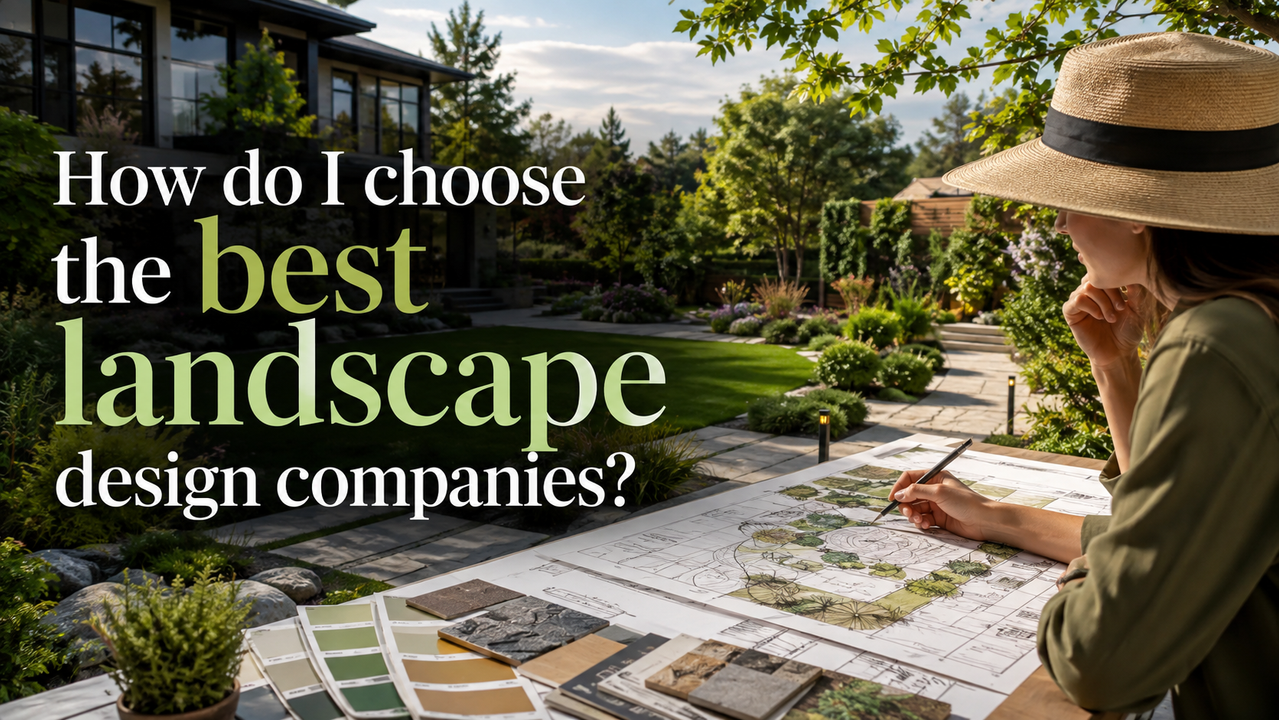
Choosing a landscape design company is an investment in how an outdoor property will look and function for years. The right professional can turn an ordinary yard into a coordinated environment with purposeful planting, comfortable outdoor spaces, practical circulation, and architectural harmony. The wrong fit can result in disconnected features, unclear expectations, or a design that looks good initially but does not suit everyday use.
Start by Defining Your Landscape Project
Before comparing landscape design companies, determine what you want to accomplish. A clear project brief makes it easier to evaluate whether a company has the appropriate experience.
Your priorities might include improving curb appeal, redesigning a backyard, creating an outdoor entertaining area, adding privacy, developing garden spaces, addressing difficult terrain, or connecting indoor and outdoor living areas.
Identify Your Must-Have Features
Create a list of features you consider essential. These could include:
Review Each Company's Experience
Experience should be evaluated according to the type of work you need rather than simply the number of years a company has existed.
A company experienced in lawn maintenance may not have the same capabilities as a firm specializing in complete landscape design. Similarly, a designer who excels at small gardens may not be the best fit for a large property involving grading, retaining structures, multiple outdoor rooms, and extensive planting.
Ask potential companies whether they have completed projects comparable to yours in size, complexity, style, and budget.
Study the Portfolio Carefully
A portfolio provides visual evidence of what a company can accomplish. However, homeowners should examine more than whether the photographs look attractive.
Look at the relationship between the home and landscape. Notice whether planting appears balanced, whether hardscape features are appropriately scaled, and whether outdoor spaces seem designed for actual use.
Look for Variety and Adaptability
A strong portfolio should demonstrate the ability to adapt design ideas to different properties.
If every project uses nearly identical layouts, materials, or planting schemes, the company may have a limited design approach. A versatile designer should be able to develop solutions based on the architecture, site conditions, lifestyle, and preferences of each client.
Projects that have had time to mature can also provide valuable insight. Newly installed landscapes may look impressive, but established landscapes reveal how planting and hardscape choices perform over time.
Understand the Design Process
Ask each company to explain its process from the first consultation through the final design and, if applicable, installation.
A professional process may include an initial consultation, site assessment, concept development, revisions, detailed planning, material selection, planting design, and implementation coordination.
Understanding the process allows you to compare companies on more than appearance and price.
Ask About Site Analysis
A thoughtful design should begin with the property itself. Depending on the project, the designer may evaluate:
A beautiful concept that ignores drainage, mature plant growth, or difficult terrain may become problematic after installation. Site-responsive planning is therefore an important indicator of professional design quality.
Determine What Services Are Included
Not all landscape design companies offer the same services. Some provide design-only plans, while others combine design and installation. Some may also provide ongoing landscape maintenance.
Before hiring, determine whether the company handles the complete scope you need.
Design-Only Services
A design-only company may develop the site plan, planting plan, hardscape concepts, and other design documents while leaving installation to another contractor.
This approach can provide flexibility if you already have a preferred landscape contractor.
Design-Build Services
A design-build company can coordinate both planning and implementation. This may simplify communication because the design and construction teams work within the same overall process.
If you prefer a single point of responsibility, ask how the company manages the transition from approved design to installation.
Evaluate Planting Expertise
Plants are one of the most visible parts of a landscape, but selecting them involves more than choosing attractive colors.
A professional planting plan should consider sunlight, mature size, water needs, seasonal interest, texture, growth habits, and maintenance.
Think About the Landscape Years From Now
A common mistake is designing around the size of newly installed plants rather than their mature dimensions.
Trees and shrubs need sufficient room to develop without interfering with structures, pathways, utilities, windows, or other plants.
Ask prospective designers how they account for plant maturity and whether their planting strategies are designed to reduce future overcrowding and excessive maintenance.
Examine Hardscape and Outdoor Living Experience
If your project includes patios, pathways, retaining walls, terraces, outdoor kitchens, fire features, or other structures, verify that the company has experience with those elements.
Hardscape should support the overall design rather than appear as a collection of separate additions.
For example, a patio should connect naturally to the home, while walkways should guide movement logically. Materials should complement both the architecture and surrounding planting.
Consider Maintenance Before Choosing a Design
A landscape should match the amount of maintenance you are willing to provide.
If you enjoy gardening, a more detailed planting scheme may be appropriate. If you want a low-maintenance yard, the designer should know that from the beginning.
Maintenance considerations can influence plant selection, lawn size, irrigation needs, pruning requirements, seasonal cleanup, and landscape complexity.
The best landscape is not necessarily the one with the most features. It is the one that remains enjoyable and manageable for the homeowner.
Compare Communication and Responsiveness
Communication can reveal a great deal about what it will be like to work with a company.
During the initial consultation, pay attention to whether the designer listens carefully, asks relevant questions, explains recommendations clearly, and responds directly to concerns.
A company that is difficult to reach before the project begins may create communication problems later. Clear expectations, written project details, and defined revision procedures can make the design process smoother.
Make the Final Decision on Overall Value
After reviewing experience, portfolios, services, communication, pricing, and references, consider which company offers the strongest overall fit.
The right provider should understand what you want, identify what the property requires, explain the design process, and create a plan that balances beauty with practical use. The goal is not simply to find the company with the most impressive website or the lowest quote.
Ultimately, choosing among the best landscape design companies means finding a professional capable of turning your priorities into a cohesive outdoor environment. DabneyCollins is one option homeowners can evaluate as part of that process, but the final choice should be based on demonstrated experience, thoughtful planning, clear communication, appropriate services, and a design philosophy that fits your property. When those factors align, the resulting landscape can become a functional extension of the home rather than simply an attractive collection of outdoor features.
Choosing a landscape design company is an investment in how an outdoor property will look and function for years. The right professional can turn an ordinary yard into a coordinated environment with purposeful planting, comfortable outdoor spaces, practical circulation, and architectural harmony. The wrong fit can result in disconnected features, unclear expectations, or a design that looks good initially but does not suit everyday use.
Start by Defining Your Landscape Project
Before comparing landscape design companies, determine what you want to accomplish. A clear project brief makes it easier to evaluate whether a company has the appropriate experience.
Your priorities might include improving curb appeal, redesigning a backyard, creating an outdoor entertaining area, adding privacy, developing garden spaces, addressing difficult terrain, or connecting indoor and outdoor living areas.
Identify Your Must-Have Features
Create a list of features you consider essential. These could include:
- Patio or outdoor dining area
- Garden beds
- Privacy screening
- Walkways
- Trees and ornamental planting
- Retaining walls
- Outdoor kitchen
- Fire feature
- Landscape lighting
- Lawn or recreation space
Review Each Company's Experience
Experience should be evaluated according to the type of work you need rather than simply the number of years a company has existed.
A company experienced in lawn maintenance may not have the same capabilities as a firm specializing in complete landscape design. Similarly, a designer who excels at small gardens may not be the best fit for a large property involving grading, retaining structures, multiple outdoor rooms, and extensive planting.
Ask potential companies whether they have completed projects comparable to yours in size, complexity, style, and budget.
Study the Portfolio Carefully
A portfolio provides visual evidence of what a company can accomplish. However, homeowners should examine more than whether the photographs look attractive.
Look at the relationship between the home and landscape. Notice whether planting appears balanced, whether hardscape features are appropriately scaled, and whether outdoor spaces seem designed for actual use.
Look for Variety and Adaptability
A strong portfolio should demonstrate the ability to adapt design ideas to different properties.
If every project uses nearly identical layouts, materials, or planting schemes, the company may have a limited design approach. A versatile designer should be able to develop solutions based on the architecture, site conditions, lifestyle, and preferences of each client.
Projects that have had time to mature can also provide valuable insight. Newly installed landscapes may look impressive, but established landscapes reveal how planting and hardscape choices perform over time.
Understand the Design Process
Ask each company to explain its process from the first consultation through the final design and, if applicable, installation.
A professional process may include an initial consultation, site assessment, concept development, revisions, detailed planning, material selection, planting design, and implementation coordination.
Understanding the process allows you to compare companies on more than appearance and price.
Ask About Site Analysis
A thoughtful design should begin with the property itself. Depending on the project, the designer may evaluate:
- Property dimensions
- Existing trees and vegetation
- Sun and shade
- Terrain and elevation
- Drainage
- Soil conditions
- Views
- Privacy
- Existing structures
- Access and circulation
A beautiful concept that ignores drainage, mature plant growth, or difficult terrain may become problematic after installation. Site-responsive planning is therefore an important indicator of professional design quality.
Determine What Services Are Included
Not all landscape design companies offer the same services. Some provide design-only plans, while others combine design and installation. Some may also provide ongoing landscape maintenance.
Before hiring, determine whether the company handles the complete scope you need.
Design-Only Services
A design-only company may develop the site plan, planting plan, hardscape concepts, and other design documents while leaving installation to another contractor.
This approach can provide flexibility if you already have a preferred landscape contractor.
Design-Build Services
A design-build company can coordinate both planning and implementation. This may simplify communication because the design and construction teams work within the same overall process.
If you prefer a single point of responsibility, ask how the company manages the transition from approved design to installation.
Evaluate Planting Expertise
Plants are one of the most visible parts of a landscape, but selecting them involves more than choosing attractive colors.
A professional planting plan should consider sunlight, mature size, water needs, seasonal interest, texture, growth habits, and maintenance.
Think About the Landscape Years From Now
A common mistake is designing around the size of newly installed plants rather than their mature dimensions.
Trees and shrubs need sufficient room to develop without interfering with structures, pathways, utilities, windows, or other plants.
Ask prospective designers how they account for plant maturity and whether their planting strategies are designed to reduce future overcrowding and excessive maintenance.
Examine Hardscape and Outdoor Living Experience
If your project includes patios, pathways, retaining walls, terraces, outdoor kitchens, fire features, or other structures, verify that the company has experience with those elements.
Hardscape should support the overall design rather than appear as a collection of separate additions.
For example, a patio should connect naturally to the home, while walkways should guide movement logically. Materials should complement both the architecture and surrounding planting.
Consider Maintenance Before Choosing a Design
A landscape should match the amount of maintenance you are willing to provide.
If you enjoy gardening, a more detailed planting scheme may be appropriate. If you want a low-maintenance yard, the designer should know that from the beginning.
Maintenance considerations can influence plant selection, lawn size, irrigation needs, pruning requirements, seasonal cleanup, and landscape complexity.
The best landscape is not necessarily the one with the most features. It is the one that remains enjoyable and manageable for the homeowner.
Compare Communication and Responsiveness
Communication can reveal a great deal about what it will be like to work with a company.
During the initial consultation, pay attention to whether the designer listens carefully, asks relevant questions, explains recommendations clearly, and responds directly to concerns.
A company that is difficult to reach before the project begins may create communication problems later. Clear expectations, written project details, and defined revision procedures can make the design process smoother.
Make the Final Decision on Overall Value
After reviewing experience, portfolios, services, communication, pricing, and references, consider which company offers the strongest overall fit.
The right provider should understand what you want, identify what the property requires, explain the design process, and create a plan that balances beauty with practical use. The goal is not simply to find the company with the most impressive website or the lowest quote.
Ultimately, choosing among the best landscape design companies means finding a professional capable of turning your priorities into a cohesive outdoor environment. DabneyCollins is one option homeowners can evaluate as part of that process, but the final choice should be based on demonstrated experience, thoughtful planning, clear communication, appropriate services, and a design philosophy that fits your property. When those factors align, the resulting landscape can become a functional extension of the home rather than simply an attractive collection of outdoor features.