
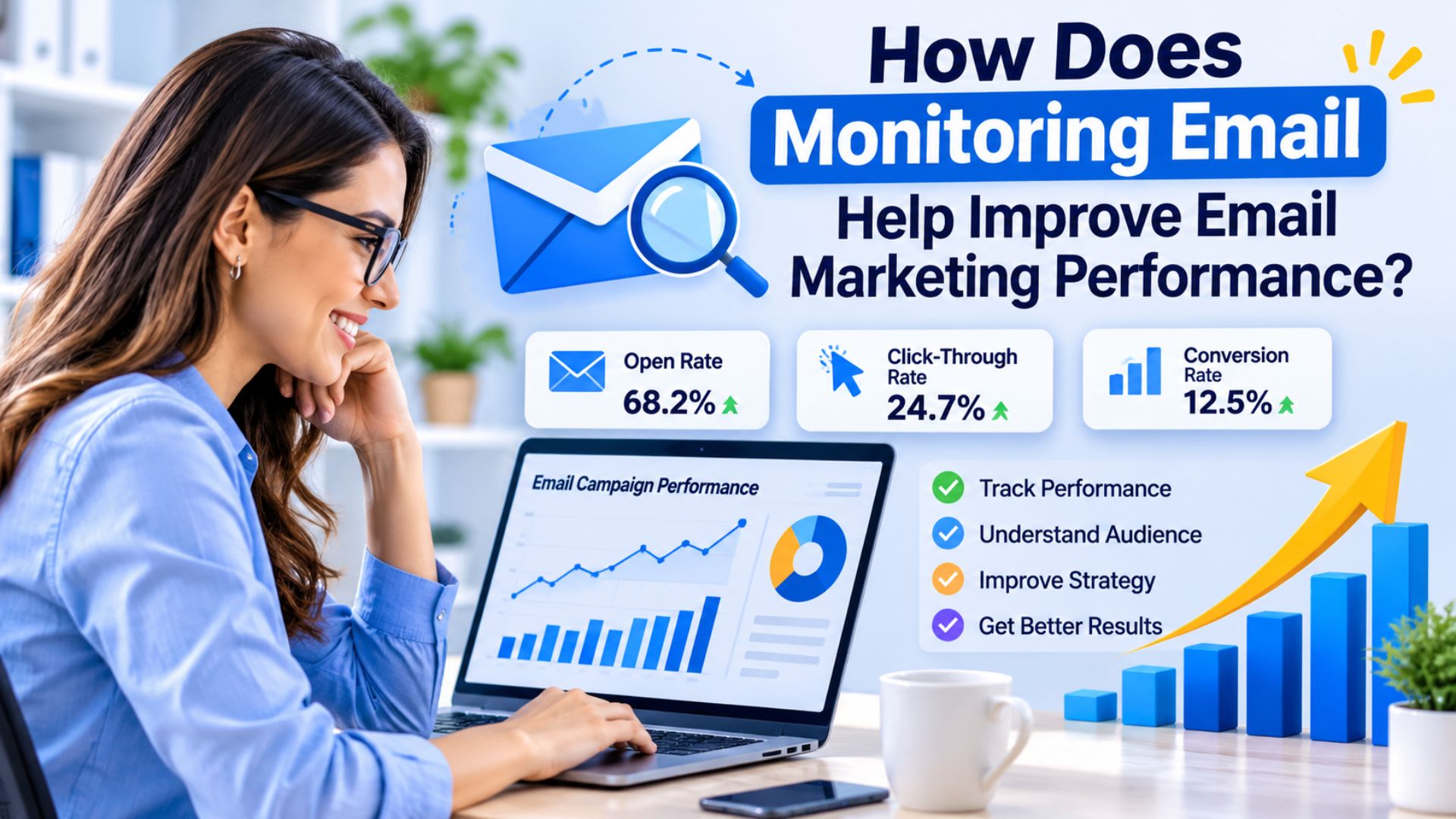
Learn how monitoring email campaigns helps businesses track performance, understand subscriber engagement, identify issues, improve content strategies, and achieve better email marketing results.
Email marketing remains an effective way for businesses to connect with customers, promote products, and build long-term relationships. However, sending emails regularly is not enough to achieve successful results. Marketers must understand how their campaigns perform, whether subscribers engage with their messages, and which strategies need improvement. Monitoring email activities helps businesses evaluate campaign performance, identify opportunities, and make informed marketing decisions. By tracking important metrics and analyzing subscriber behavior, businesses can develop more relevant campaigns and improve their overall email marketing results.
Understanding the Importance of Email Monitoring
Email monitoring involves tracking and evaluating different aspects of email campaigns to understand their effectiveness. It allows marketers to examine how subscribers interact with messages and whether campaigns achieve their intended goals.
Businesses can use email monitoring to identify successful campaigns, discover performance problems, and understand audience preferences. Instead of relying on assumptions, marketers can use measurable information to improve their communication strategies.
Some important aspects to monitor include:
- Open rates: Understand how many recipients open their emails.
- Click-through rates: Measure how frequently subscribers click links within messages.
- Conversion rates: Track how many recipients complete desired actions, such as purchasing a product or registering for an event.
- Bounce rates: Identify emails that cannot reach their intended recipients.
- Unsubscribe rates: Understand whether subscribers are losing interest in receiving communications.
Identifying What Your Audience Wants
Understanding subscriber preferences is essential for creating successful email campaigns. Different audiences respond to different messages, offers, and communication styles. Monitoring campaign performance helps marketers discover which types of content generate better engagement.
For example, if promotional emails receive more clicks than general announcements, businesses can consider developing more relevant offers for their subscribers.
Marketers can improve audience understanding by:
- Analyzing which topics receive the most engagement.
- Identifying preferred email formats and content styles.
- Reviewing subscriber responses to different promotions.
- Understanding which links and offers attract attention.
- Segmenting audiences according to their interests and behavior.

Improving Email Content and Subject Lines
Email content plays an important role in attracting attention and encouraging subscribers to take action. A well-written subject line can encourage recipients to open a message, while useful content can motivate them to explore products or services.
Campaign performance data helps marketers understand which subject lines, headlines, and messages work effectively.
Consider these practical improvements:
- Write clear and interesting subject lines.
- Keep email content informative and relevant.
- Use simple language and easy-to-understand messages.
- Include clear calls to action.
- Test different content formats to identify audience preferences.
Detecting Problems Before They Affect Campaigns
Email campaigns can experience several problems, including delivery failures, high bounce rates, broken links, and low subscriber engagement. If businesses ignore these issues, their marketing performance may gradually decline.
Consistent monitoring email activities can help identify these problems before they become more serious.
For example, a sudden increase in bounce rates may indicate outdated email addresses or list-quality issues. Similarly, declining open rates may suggest that subject lines, sending frequency, or audience targeting need attention.
Businesses should regularly:
- Check email delivery reports.
- Remove invalid or inactive email addresses when appropriate.
- Test links and email layouts before sending campaigns.
- Review spam complaints and unsubscribe patterns.
- Investigate sudden changes in campaign performance.

Making Better Marketing Decisions With Performance Data
Successful email marketing requires continuous evaluation and improvement. Performance data helps marketers understand which campaigns drive meaningful results and where adjustments are needed.
Businesses can use these insights to plan future campaigns more effectively. For example, identifying the best-performing sending times can help marketers schedule messages when their audiences are more likely to engage.
Useful ways to apply campaign data include:
- Comparing the results of different campaigns.
- Testing alternative subject lines and calls to action.
- Adjusting email frequency based on subscriber engagement.
- Improving audience segmentation.
- Evaluating conversions against marketing objectives.
Best Practices for Effective Email Monitoring
A consistent approach makes it easier to understand campaign performance and identify improvements. Businesses should establish a monitoring routine that focuses on meaningful results rather than tracking every available metric without a clear purpose.
Some useful practices include:
- Set clear objectives: Decide whether the campaign aims to increase sales, website visits, registrations, or customer engagement.
- Track relevant metrics: Focus on measurements that directly support campaign goals.
- Review performance regularly: Examine results after each campaign and compare them over time.
- Conduct A/B testing: Experiment with subject lines, content, and calls to action.
- Maintain a healthy email list: Keep subscriber information accurate and respect email preferences.
- Protect subscriber privacy: Follow applicable data protection and email marketing regulations.
Conclusion
Email marketing performance improves when businesses understand how subscribers interact with their campaigns and use those insights to make meaningful changes. Tracking engagement, evaluating content, identifying delivery problems, and testing different approaches can help marketers achieve better results. Consistent Monitoring email practices also support smarter decisions, stronger customer relationships, and more effective campaign planning. By reviewing performance regularly and adapting strategies to audience needs, businesses can make their email marketing efforts more productive and valuable over time.
Frequently Asked Questions
1. What is email monitoring?
Email monitoring involves tracking campaign performance, including opens, clicks, conversions, delivery rates, and subscriber engagement.
2. Which email marketing metrics should businesses track?
Businesses should track open rates, click-through rates, conversion rates, bounce rates, and unsubscribe rates.
3. How often should email campaigns be monitored?
Review campaigns after each send, and compare performance regularly to identify trends and opportunities for improvement.