
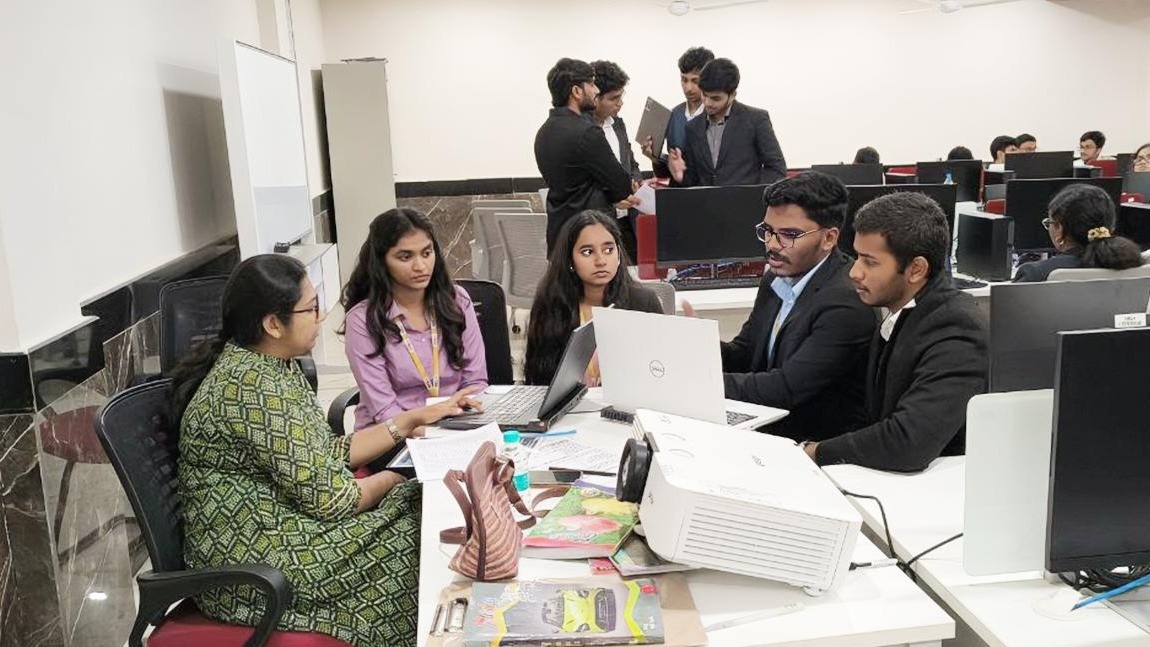
Students from KLH Bachupally, a constituent of KL University, have reshaped a routine academic requirement into a hands-on cybersecurity project that mirrors real-world attack scenarios. As part of their Computer Networks course, second-year CSE students P. Shashindra Reddy, M. Yeseshwini, G. Anshika, and Susheel created a Smart Honeypot under the mentorship of Mr. Shaik Asif. Their goal was to understand how attackers behave by observing them in a controlled setting.
The team built a simulated environment using two virtual machines. One system acted as a vulnerable Linux target, while the other served as an attacker powered by Kali Linux. With Cowrie running quietly in the background, the honeypot captured scans, login attempts, keystrokes, and every command executed inside the fake SSH session. Because the entire experiment was isolated inside a secure virtual network, the team was able to study intrusion attempts without exposing the system to external risks.
Instead of stopping at raw data collection, the students converted the JSON logs into structured CSV files and mapped the results into visual dashboards. These graphs highlighted top attacker IPs, timelines of activity, and recurring command patterns. They also explored methods used in modern security investigations, including session tracking, timing analysis, packet signatures, and Nmap fingerprinting. Each layer added clarity to how attackers approach a system and what clues they leave behind.
The project gave the team a front-row seat to the mindset of an intruder. It showed them how attacks unfold, what evidence gets generated, and how defenders piece together information during forensic analysis. For the students, it was not just about deploying tools; it was about interpreting behavior and understanding the human element behind cyber threats.
KL University continues to encourage student-led innovation through its strong academic ecosystem, modern labs, and dedicated mentorship. This culture of practical learning is one of the reasons KLU stands among the best universities in India, especially for students pursuing future-ready fields like cybersecurity.
This project stands as a strong example of how experiential learning can deepen technical understanding and prepare students for real-world challenges.