
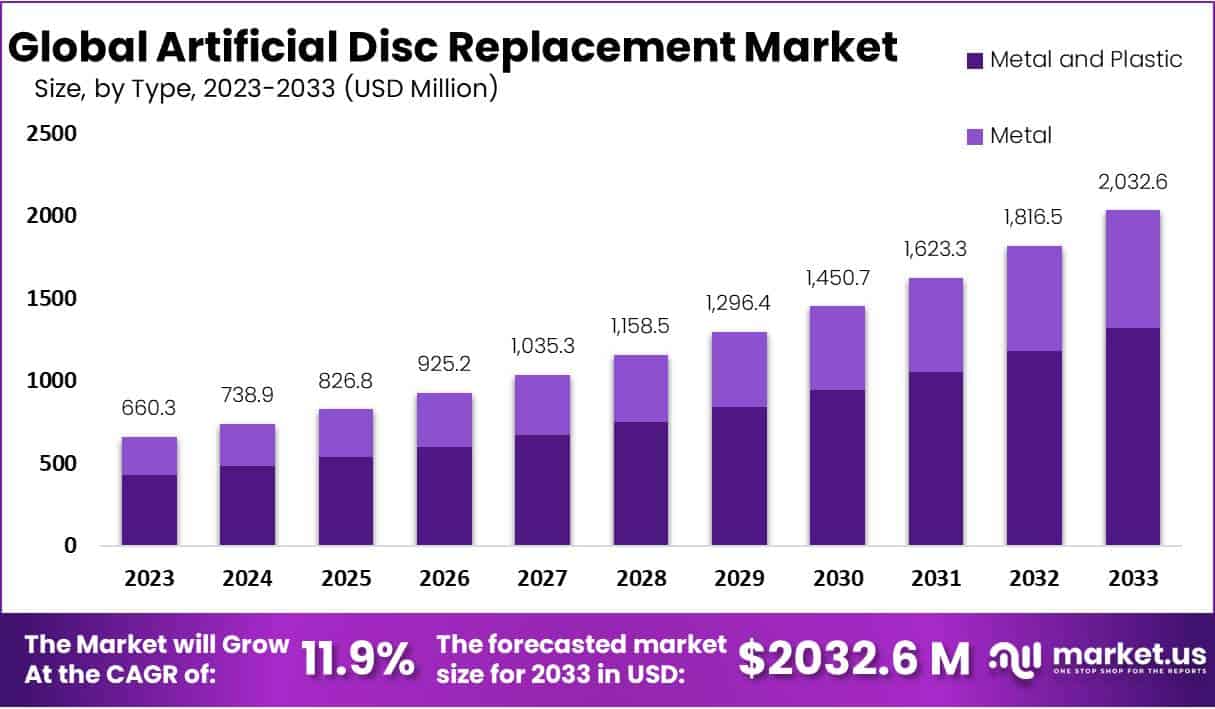
Artificial Disc Replacement (ADR) is a burgeoning sector in the medical industry, offering innovative solutions for individuals grappling with spinal issues. With a projected market value of approximately USD 2,032.6 million by 2033, this market showcases substantial growth prospects, driven by technological advancements and demographic shifts.
Understanding ADR: ADR, also known as Total Disc Replacement, involves surgically replacing damaged intervertebral discs with artificial counterparts. Unlike traditional spinal fusion, ADR preserves the spine's natural movement, aiming to alleviate pain, enhance mobility, and sustain spinal function.
Market Dynamics: The ADR market is propelled by several factors. Continuous technological innovations improve the efficiency and durability of artificial discs, attracting both patients and healthcare professionals. Additionally, the aging global population contributes to increased demand, addressing rising cases of degenerative disc diseases.
Key Segments: Metal and Plastic artificial discs dominate the market due to their durability and adaptability, capturing over 65% of the market share. Cervical Disc Replacement leads in indication, addressing specific neck region issues, while Lumbar Disc Replacement trails closely behind, targeting lower back concerns.
Market Drivers and Restraints: Technological advancements, increasing aging population, and a preference for minimally invasive procedures drive market growth. However, high procedure costs, limited reimbursement policies, and regulatory complexities pose challenges, hindering market expansion.
Opportunities and Trends: Emerging economies offer significant growth opportunities as healthcare infrastructure improves. Customized solutions tailored to individual patient needs and collaborations with research institutions are trends poised to shape the market's future.
Regional Landscape: North America leads the market, followed by Europe and Asia-Pacific. Factors such as well-established healthcare infrastructure and regulatory frameworks contribute to regional dominance.
In essence, the Artificial Disc Replacement market presents a promising landscape fueled by innovation, demographic shifts, and evolving healthcare preferences. With continued advancements and strategic initiatives, the market is poised for sustained growth, offering hope to individuals seeking effective spinal solutions.